

One of the most overlooked facts in American higher education is that 3% of colleges have helped produce a remarkable share of the Black graduates who go on to lead, build, and contribute across American society.
A Personal and Institutional Journey
In the study of American higher education, there are moments when one realizes they are standing inside a much larger, often unexamined, story. As a sociologist and educator, I view the landscape of our institutions not merely as collections of buildings and curricula, but as structural environments that shape human potential.
My own perspective is shaped by a dual role. I am both a product of historically Black colleges and universities and the current Chair of Sociology at Norfolk State University.
My academic journey began at Norfolk State University, where I earned my bachelor’s degree. Those formative years at an HBCU shaped my understanding of education, community, and institutional responsibility.
Later, I pursued doctoral studies at Case Western Reserve University, an institution whose history dates back to 1826. To this day, I remain one of the only African American males to earn a PhD in sociology from that university.
That contrast, the nurturing environment of an HBCU alongside the rarity of Black male representation in the upper reaches of many predominantly white institutions, reveals something important about the structural conditions that exist within American higher education.
A Generational Legacy
The story of historically Black colleges is not only institutional. For many of us, it is generational.
My connection to this history reaches back to the post Reconstruction era through my great great grandfather, Dr. William Harvey Goler.
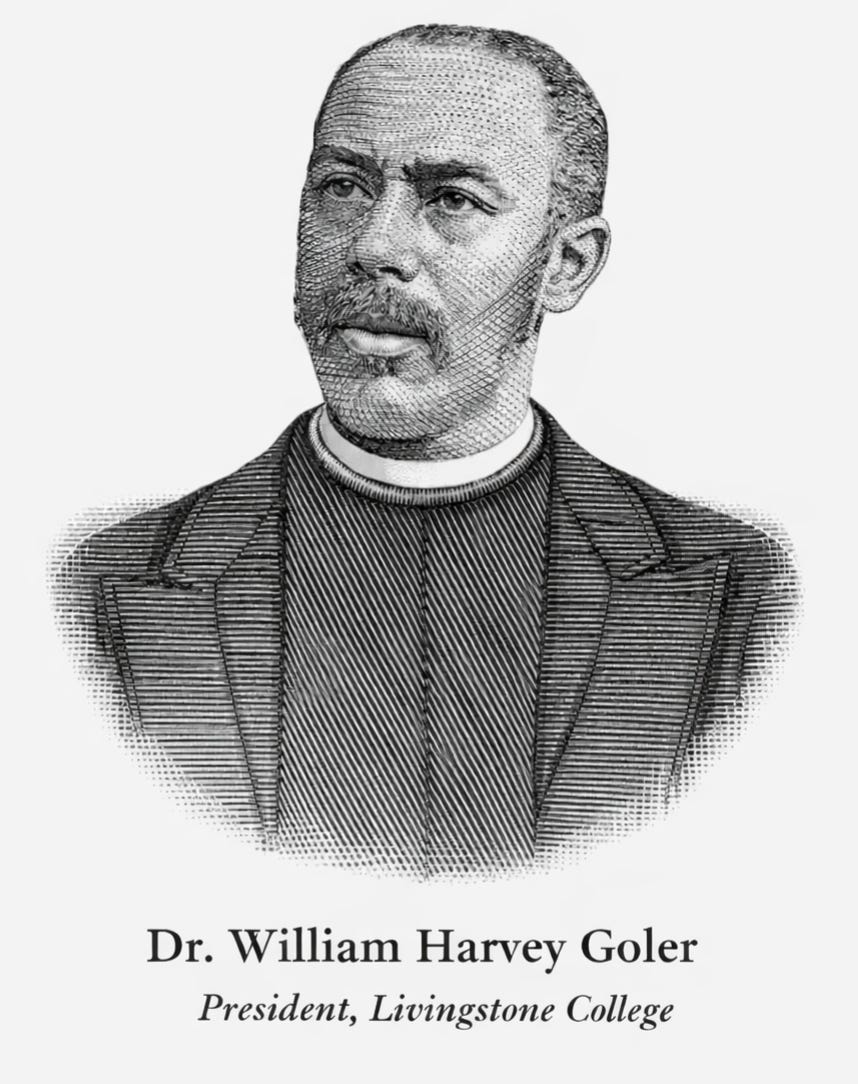
An early architect of intellectual infrastructure at historically Black colleges and universities. Working alongside leaders such as Booker T. Washington and partners like the Carnegie Foundation, he helped expand access to libraries and learning resources for Black scholars across the nation.
Dr. Goler served as president of Livingstone College, a historically Black institution in Salisbury, North Carolina. His leadership reflected a commitment to intellectual infrastructure. Working alongside Booker T. Washington and partners like the Carnegie Foundation, he helped secure libraries for historically Black colleges across the nation, ensuring that Black scholars had access to the tools of modern learning.
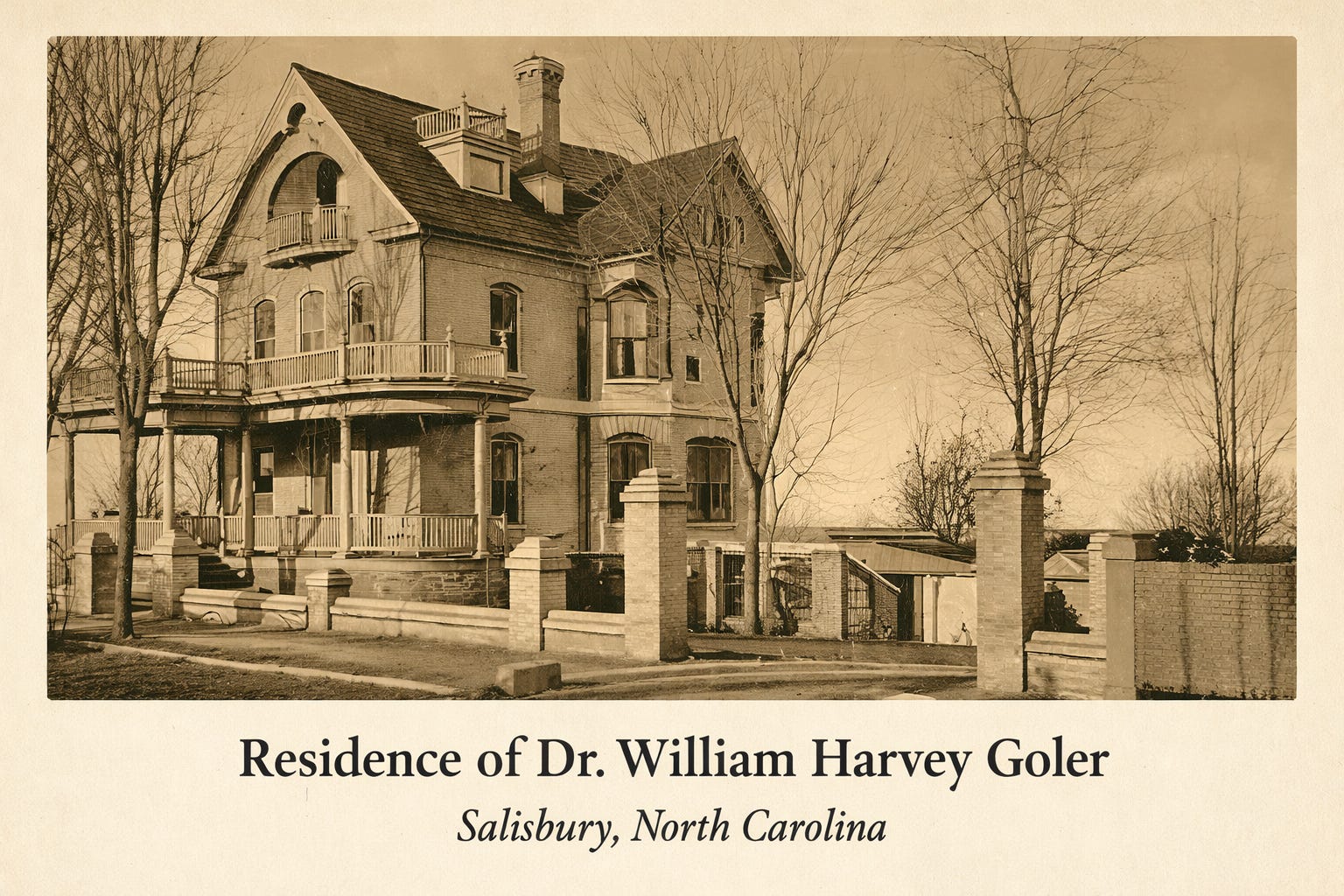
Residence of Dr. William Harvey Goler Salisbury, North Carolina Home of Dr. William Harvey Goler during his presidency at Livingstone College. Goler led the institution through a formative era in the development of historically Black higher education, helping strengthen the academic foundations that would shape generations of Black scholars.
He served in this role until 1917 and later remained president emeritus until his death at the age of 97.
His life reminds us that the work of HBCUs has always been about more than survival. It has been about building institutions capable of developing generations of leaders.
The Quiet Disparity in American Higher Education
When we shift from personal history to statistical evidence, an unmistakable pattern emerges.
Consider a few numbers.
African Americans represent approximately 13% of the population of the United States.
Historically Black Colleges and Universities represent roughly 3% of all colleges and universities in the country.
3%.
Three percent of institutions producing leadership that helps shape an entire nation.
Yet those institutions produce:
• 20% of all Black college graduates in the United States
• 25% of Black graduates in science, technology, engineering, and mathematics
In other words, a small network of institutions representing just 3% of American higher education is responsible for educating a significant share of the graduates within a population that itself represents only 13% of the nation.
The pattern becomes even more striking when we examine the professional fields that shape and sustain society.
HBCU graduates account for approximately:
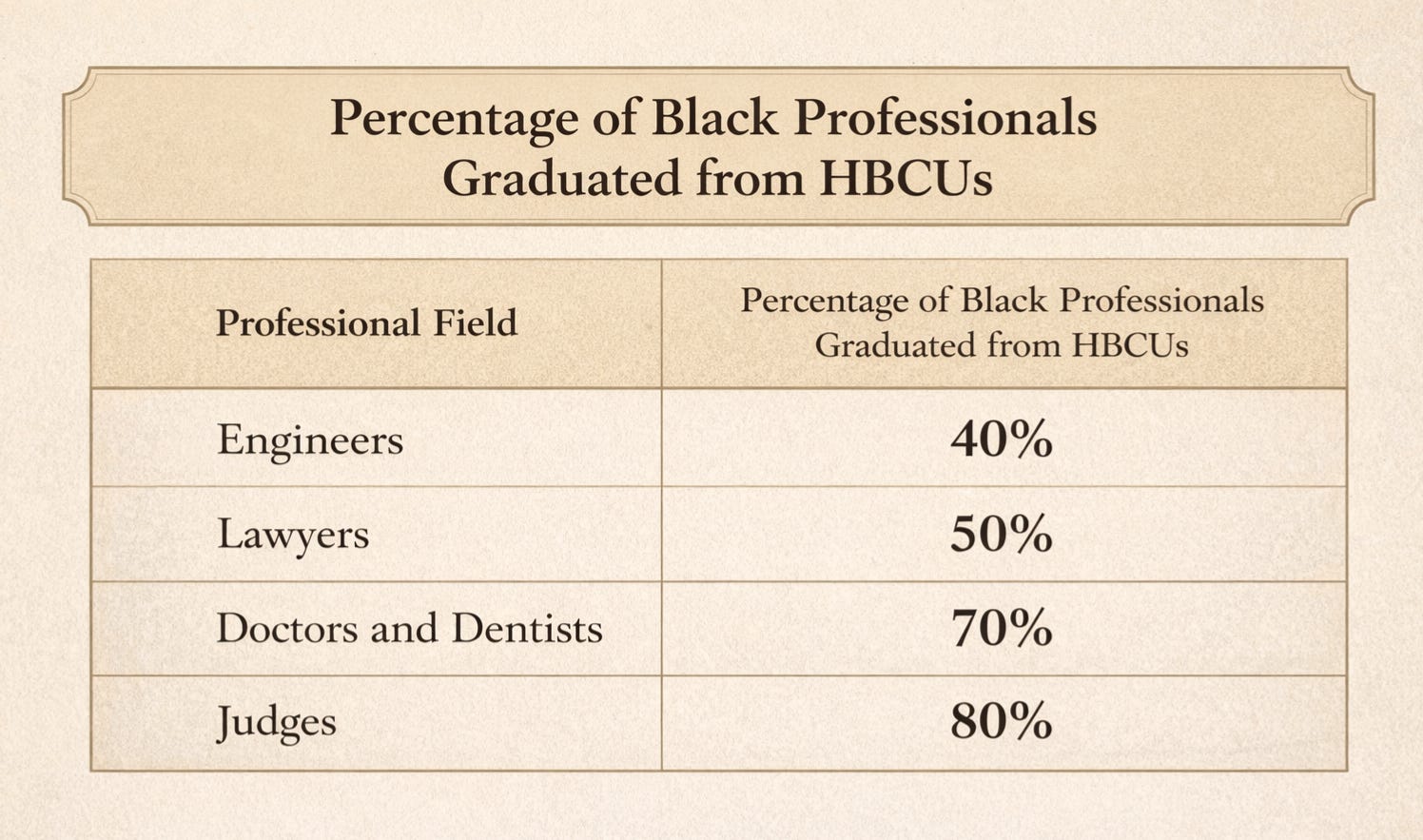
From a policy perspective, these numbers raise an important question about return on investment.
If institutions representing just 3% of American higher education are producing such disproportionate outcomes, what does that suggest about the return society receives from investing in historically Black colleges and universities?
Pause for a moment and consider what these numbers imply.
3% of institutions are responsible for producing a substantial portion of the graduates who go on to lead, build, and contribute across American society.
If this level of productivity were occurring in any other sector, corporate, technological, or industrial, analysts would immediately investigate the structural conditions responsible for such high efficiency output.
Yet in higher education, this phenomenon is rarely examined in those terms.
The HBCU Productivity Paradox
From a sociological perspective, this pattern deserves a name.
I call it the HBCU Productivity Paradox.
The paradox refers to a structural phenomenon in which institutions that have historically operated with fewer financial resources, smaller endowments, and less research infrastructure than their predominantly white counterparts nevertheless produce extraordinary levels of graduate impact and professional leadership.
Put simply, institutions with fewer resources are generating disproportionately high levels of graduates who go on to lead, build, and contribute across American society.
That is the paradox.
The paradox also suggests something deeper about how institutions function.
It suggests that institutional culture and mission may generate outcomes that financial inputs alone cannot fully explain.
The Ecosystem of Success
The explanation lies in what might best be described as ecosystems of intellectual development.
At historically Black colleges, student potential is assumed rather than questioned. Students are surrounded by faculty, peers, and institutional traditions that cultivate confidence, discipline, and a sense of responsibility to community.
These environments do more than educate. They form leaders.
They transform aspiration into achievement.
They turn opportunity into responsibility.
The result is one of the most remarkable examples of institutional productivity in American higher education.
3% of institutions helping produce a significant share of the graduates who go on to shape the professional and civic life of the nation.
A Pattern Worth Studying
The story of historically Black colleges and universities is ultimately a story about how institutions shape human possibility.
For many of us, it is also a reminder that we are part of a much longer tradition of building, teaching, and leading across generations.
The HBCU Productivity Paradox names a structural phenomenon in which a small network of institutions representing only 3% of American higher education has produced a disproportionate share of the graduates who go on to lead, build, and contribute across American society.
This is not simply an anecdote.
It is a pattern.
And perhaps it is time we begin to study it with the academic seriousness it deserves.
Great stuff Tim. Never knew this. Wow